

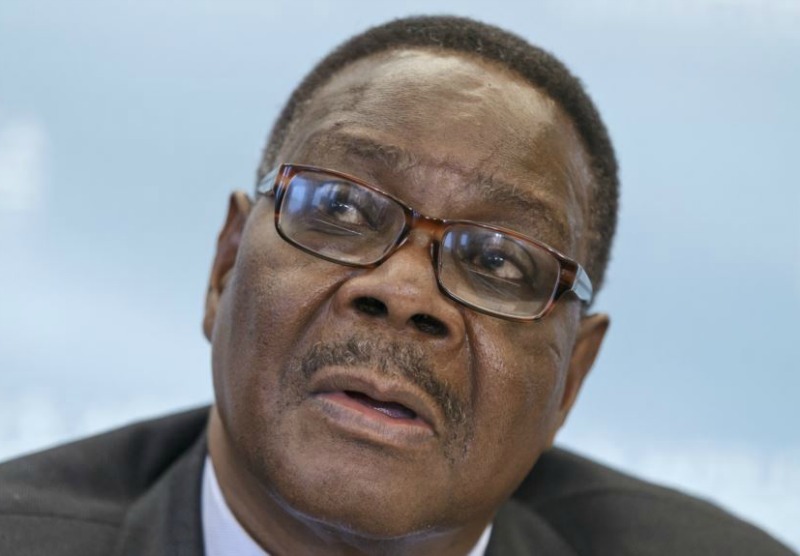
LILONGWE – Malawi President Arthur Peter Mutharika has once again left the country for South Africa, reopening questions about the purpose of his repeated trips to the neighbouring country and, particularly, whether they are connected to his health.
Mutharika departed Kamuzu International Airport in Lilongwe on Tuesday, October 6, for what the Government has officially described as a private visit.
Chief Secretary to the Government Justin Adack Saidi confirmed the departure but did not disclose the purpose of the visit or how long the President is expected to remain in South Africa.
That official silence is significant because this is not Mutharika’s first private trip to South Africa since returning to the presidency.
It is his fifth publicly announced private trip since October 2025.
Records show that he travelled to South Africa from December 1 to 15, 2025; March 1 to 12, 2026; June 12 to 29; and August 5 to 15.
The latest trip therefore comes less than two months after his return from his previous 11-day stay.
And that pattern has increasingly made each departure a subject of public interest.
Why South Africa?
The official explanation remains simple: private visit.
But the question surrounding Mutharika’s South African trips has never really been about whether a president is entitled to private time.
It is about what happens when a sitting President repeatedly leaves the country for an undisclosed purpose, particularly when the destination remains the same and the Government provides little information about the nature or duration of the visits.
Some reports and commentators have linked the trips to medical check-ups or treatment.
However, there is currently no official statement from the Malawian Government confirming that Tuesday’s trip is for medical treatment.
That distinction matters.
Mutharika himself has previously rejected speculation about his health.
In May, amid rumours about his wellbeing and reports that he had travelled to South Africa for medical treatment, he dismissed the claims as “silly and laughable” and said he was in good health.
The President also appeared publicly in a lengthy interview with Malawi Broadcasting Corporation earlier this month, at a time when questions about his health had again been circulating. Reports following that interview noted that he appeared composed and engaged.
None of that, however, establishes what today’s trip is about.
The medical question refuses to disappear
At 86, Mutharika is one of Africa’s oldest serving presidents.
His age has inevitably made his health a matter of public interest, particularly because Malawi’s Constitution places the Presidency at the centre of executive authority.
But there is a difference between legitimate public interest and speculation about an individual’s medical condition.
The Government has a responsibility to provide enough information for citizens to understand significant issues surrounding the Presidency, while the President also has a legitimate private sphere.
The difficulty arises in the space between those two principles.
Calling a trip “private” does not tell Malawians whether the President is attending a personal engagement, receiving medical attention, meeting people privately or simply taking time away from official duties.
And because no purpose has been disclosed, the public conversation is inevitably filled by information from unofficial sources.
That is precisely what has happened again.
Five trips in one year
The frequency is perhaps the most striking part of the story.
Mutharika has now spent significant periods in South Africa during several of his private visits.
According to records compiled by Malawi24, his four completed trips before Tuesday totalled 53 days in South Africa since his return to office.
That means that, even before the latest departure, he had spent almost two months of his first year back in office on these publicly announced private visits.
That does not prove that the trips are medical.
Nor does it prove that they are inappropriate.
But it does explain why they have become a political and public-interest issue in Malawi.
What happens when the President is away?
Another question concerns the continuity of government.
Mutharika’s latest absence comes as Malawi is facing significant economic and social pressures, including a worsening fuel crisis.
Reports on Tuesday said the fuel shortage has become severe enough to push transport costs sharply higher in parts of the country.
The President is therefore leaving at a time when his Government is dealing with immediate domestic challenges.
Malawi has constitutional mechanisms for the exercise of presidential functions when the President is absent, and Vice-President Jane Ansah has represented him at official engagements during previous absences.
There is therefore no evidence that the machinery of government simply stops when Mutharika travels.
But the repeated absences inevitably raise a broader question:
How much information should the public receive when the person at the centre of the executive branch is outside the country?
Why South Africa matters
There is also a practical reason South Africa keeps featuring in the story.
South Africa has some of the most advanced medical facilities on the continent and is a common destination for patients from across Africa seeking specialised treatment.
That makes medical travel there entirely plausible in general terms.
But plausibility is not confirmation.
And that is why Zambian Eye would distinguish between the claim that Mutharika is in South Africa for medical reasons and the fact that he is currently in South Africa on a Government-confirmed private visit.
The former requires evidence.
The latter is established.
The bigger issue is transparency
Perhaps the most interesting part of Mutharika’s latest journey is therefore not where he has gone.
It is what the Government has chosen not to say.
The official statement confirms his departure but gives no purpose and no return date.
That was also the pattern surrounding several of his previous trips.
During his June visit, for example, Mutharika later said he had held meetings with South African President Cyril Ramaphosa concerning problems facing Malawians in South Africa. Those meetings were not publicly disclosed when the trip began.
That experience demonstrates why “private visit” can sometimes leave the public with more questions than answers.
A trip can be private in its personal circumstances while still having public implications when the traveller is the head of state.
For now, the facts are simple
Mutharika has left Malawi.
He is in South Africa.
The Government says the trip is private.
The Government has not said that he has gone for medical treatment.
There is a documented pattern of repeated South African trips since his return to office.
And previous health rumours surrounding the President mean that every new unexplained trip is likely to attract renewed scrutiny.
What happens next may depend on whether State House provides more information — or whether, as with previous journeys, Malawians only learn more when the President returns.
For now, the question remains open:
Is this simply another private trip, or is there more behind the President’s repeated journeys to South Africa?
Zambian Eye will follow the developments, but the distinction between what is known and what is being speculated about Mutharika’s health remains important.