

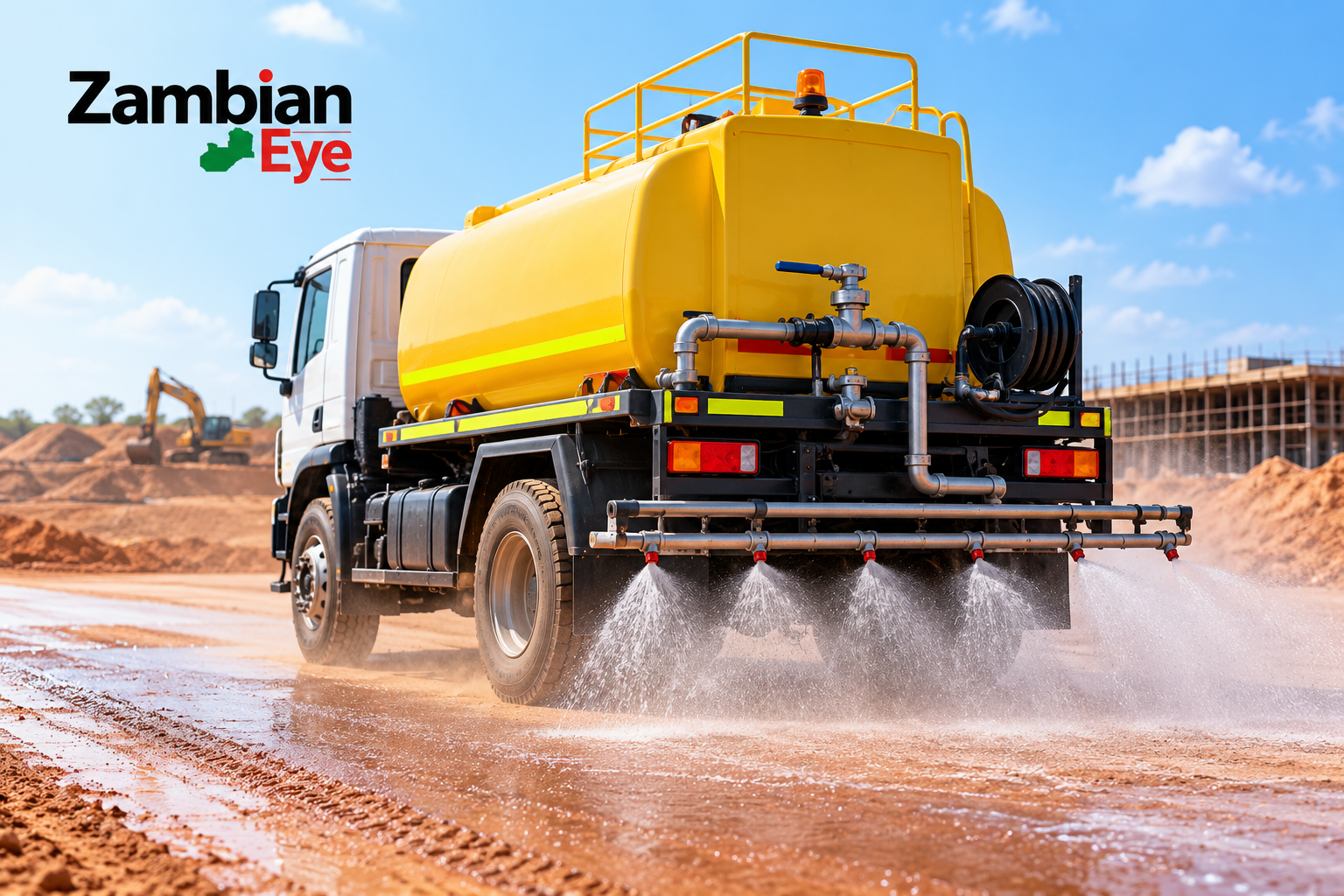
Construction sites need effective dust suppression, but controlling airborne particles often creates its own environmental challenges through extra vehicle movements, water use, and, critically, fuel consumption. Since dust control often cannot be removed from the equation, the goal must be to make it more efficient and, consequently, less impactful on the environment.
One option is to use equipment that allows existing site vehicles to take on water-delivery duties as needed. A slip on water cart, for instance, can provide a flexible alternative to operating a dedicated water truck. This reduces the number of vehicles needed on-site and thus avoids their attendant environmental impacts. Combined with sensible tank sizing, targeted spraying, and efficient pumping, this approach can help construction teams control dust while limiting the site’s fuel needs.
- How Do Slip-On Water Carts Improve Dust Control Efficiency?
Dedicated water trucks make sense where dust suppression is required continuously. However, many projects only need additional water-delivery capacity during dry periods, earthworks, road construction, or other dust-intensive phases.
Using removable, skid-mounted systems, which can be customised by providers like Liquimech Group Pty Ltd, allows a compatible vehicle to take on water-delivery duties when required and return to other work afterwards, removing the financial and environmental costs of adding dedicated water trucks. This flexibility can also help contractors adapt their fleet to changing conditions rather than keeping one vehicle permanently assigned to a single task.
- How Does Tank Size Affect Fuel Consumption?
Water-cart systems can be configured in different capacities, including tanks from around 5,000 to 17,000 litres. A larger tank may reduce trips to a refill point, which can be useful on bigger sites or where water sources are some distance away.
However, water is heavy. Carrying much more than the job requires increases the total payload as well as the energy needed to move it.
For most projects, the best approach is to match capacity to site size, refill distance, expected water demand, as well as practical vehicle carrying capacity. The aim is to reduce refill journeys without routinely carrying excess weight, which in turn prevents the over-consumption of fuel.
- Can Better Spray Control Reduce Repeat Passes?
Generally speaking, more precise spraying can reduce the need to treat the same area repeatedly. You don’t want to consume more water than you need, but you also want to make sure that you deliver enough water so the treated area does not dry up and start kicking up dust again. If effective coverage is achieved in fewer passes, vehicles may spend less time travelling solely for dust suppression.
To aid with application, slip-on water cart systems can include spray bars, dribble bars, directional nozzles, and multiple spray heads. These add-on fixtures allow operators to apply water according to the surface and conditions rather than relying on one fixed setting.
- How Can Operators Avoid Unnecessary Engine Time?
Small inefficiencies inevitably add up when repeated throughout the project. For example, vehicles may spend unnecessary time idling while operators adjust equipment, move between treatment zones, or manually control water delivery.
Remote pump and spray controls can simplify the process by allowing water delivery to be managed directly from the cab. Operators can spray more precisely without having to exit the vehicle to set up the equipment, which means they can focus on conserving tank capacity and covering more useful ground more efficiently.
- Which Pump Setup Is Most Efficient?
Water carts can be fitted with hydraulic, petrol, or diesel-powered pumping systems. The most suitable option depends on the host vehicle, required flow rate, site conditions, and expected usage. Where a suitable hydraulic system is already available, the pump may be operated without an additional standalone engine. In other applications, an independent pump may be more practical.
The important point is to assess the complete setup rather than simply choosing maximum output. An efficient system should deliver the required water reliably without adding unnecessary fuel demand or complexity.
- Can Faster Filling and Setup Reduce Emissions?
Dust control becomes less efficient when vehicles spend too much time being filled, connected, adjusted, or prepared for use. Features such as integrated filling and discharge points, hose reels, forklift access, and removable skid frames can simplify everyday handling, reducing the amount of resulting emissions from suppressing dust in a given section of a construction site.
Less Dust, Less Fuel, Smarter Construction
Reducing emissions on construction sites is often associated with major fleet upgrades or new technology. While these can make a difference, contractors can also drive meaningful efficiency gains by improving everyday working practices and finding new ways to make the most of the resources they have available.
Flexible water-delivery systems that maximise the potential of existing vehicles exemplify this way of thinking. So long as technical considerations like tank capacity, vehicle payload, pump efficiency, refill frequency, and the actual water demands of the site are accounted for, these systems can support more efficient dust suppression without simply shifting the environmental burden elsewhere. For construction teams looking to manage dust without adding avoidable fuel consumption, smarter water delivery offers a practical place to start.