


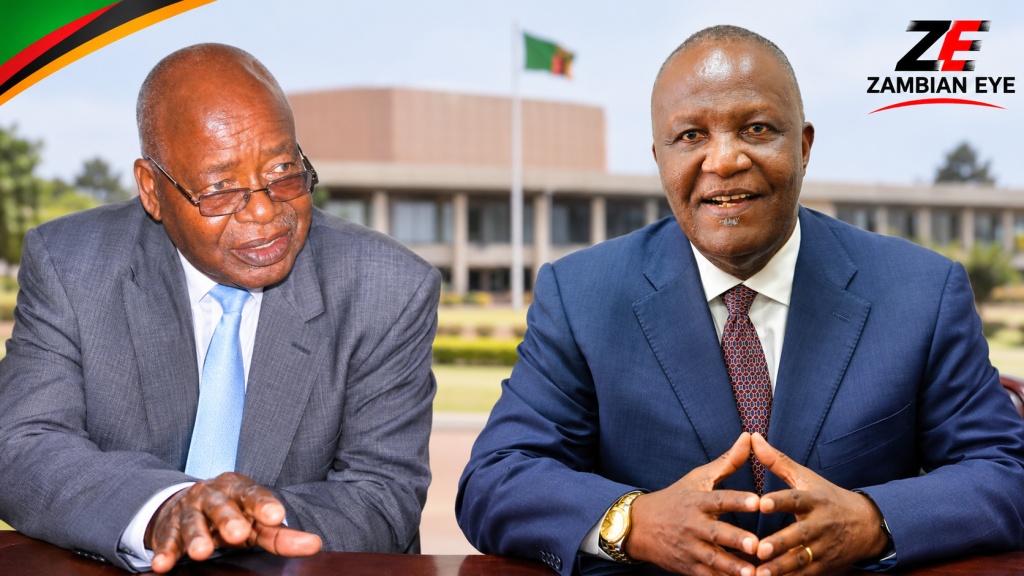
How does a politician remain relevant when governments change, parties lose elections and political alliances shift? Daniel Munkombwe became one of Zambia’s most colourful examples. Decades later, Felix Mutati’s political journey is raising a similar question.
There are politicians who build their careers around a political party, and there are those whose influence appears to outlive the fortunes of the parties they belong to, Zambian Eye digs into the subject.
In Zambia, few political figures illustrated this second category as vividly as the late Daniel Chibbwalu Munkombwe.
Known for his colourful personality, political instincts and outspoken views, Munkombwe was active in politics before independence and remained influential through several political eras. He experienced the nationalist struggle under African National Congress (ANC), the UNIP years, the return to multiparty democracy, the MMD administration and, eventually, the Patriotic Front government.
His political journey was so unusual that historian Dr. Sishuwa Sishuwa, writing in News Diggers in June 2018, described him as having served six different political parties: the African National Congress (ANC), People’s Democratic Congress (PEDCO), United National Independence Party (UNIP), Movement for Multi-Party Democracy (MMD), United Party for National Development (UPND) and Patriotic Front (PF).
Munkombwe also left behind an autobiography, The Politics of Influence, published in 2013, in which he documented his experiences and relationships with Zambia’s political leadership.
Today, with Felix Mutati continuing to occupy senior government positions under successive administrations, the comparison is difficult to ignore.
Is Mutati becoming the modern-day Daniel Munkombwe, or is this simply an example of a politician whose experience and political skills make him valuable to different governments?
Daniel Munkombwe: A political journey spanning generations
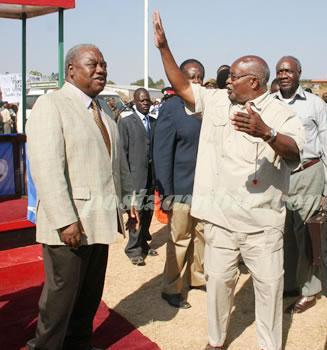
Born in 1932 in Mboole Village in Choma District, Daniel Munkombwe entered politics during the struggle for independence.
His political involvement began in the African National Congress under Harry Nkumbula. He was active in the nationalist movement and held leadership positions within the party in Southern Province.
Following the political divisions that emerged in the independence movement, he became associated with Kenneth Kaunda’s UNIP.
Munkombwe joined the political establishment after independence and served in different capacities within the party and government.
His career would eventually take him through several political organisations, but his ability to remain involved in national politics became one of his defining characteristics.
His parliamentary and ministerial career under UNIP
Munkombwe was elected Member of Parliament for Choma Central in 1973 and retained the seat through successive elections in 1978, 1983 and 1988.
He represented the constituency for approximately 19 years, until the 1991 political transition.
During Kenneth Kaunda’s administration, he held several government positions.
His ministerial career included:
- Minister of State in the Ministry of Agriculture and Water Development, from 1983 to 1986.
- Minister of State in the Ministry of Tourism in 1986.
- Minister of State responsible for water in 1990.
- Minister responsible for Southern Province in 1991.
He also became the first Cabinet Minister responsible for Decentralisation, a position he later referred to in Parliament as part of his public service record.
These were significant responsibilities in a period when Zambia operated under a one-party political system.
The 1991 elections changed the political landscape. Kaunda and UNIP lost power to the MMD, and Munkombwe also lost his parliamentary seat.
But his political career was far from over.
From UNIP to MMD: Surviving the change of government
Following the defeat of UNIP in 1991, Munkombwe became involved in the MMD, the party that had taken over government under Frederick Chiluba.
He served as a provincial party leader in the MMD and remained active in the political structures of the new ruling party.
This was one of the defining transitions of his career: moving from the political establishment of the outgoing government into the party that had defeated it.
When Levy Mwanawasa became President in 2001, Munkombwe was nominated as member of Parliament and appointed Minister for Southern Province.
Although he had not returned to Parliament through an elected constituency seat, he was brought into government and became an important political figure in the province.
He continued serving under the MMD administration, including during Rupiah Banda’s presidency.
He also served in the Office of the Vice-President during the Banda administration, according to contemporary accounts of his political career.
His relationship with Banda, however, was not without difficulties. In his memoirs, Munkombwe discussed his disappointment after being removed from the presidential campaign team ahead of the 2011 elections.
It was another reminder that political influence can be considerable but is never guaranteed.
The PF era: Munkombwe returns to government

The 2011 elections brought another major political transition.
The MMD lost power to Michael Sata’s Patriotic Front.
For many politicians associated with the outgoing administration, the change meant moving into opposition. Munkombwe, however, would again find his way into government.
In March 2013, President Sata nominated him to Parliament and appointed him Minister for Southern Province, the same provincial portfolio he had previously held under the MMD.
The appointment attracted attention because Munkombwe had moved from the party that lost power to the very government that defeated it.
Zambian Eye reported at the time that Sata considered him suitable for the position because of his experience and knowledge of the province.
Munkombwe’s political philosophy was also well known. He had publicly spoken about belonging to political parties where members could obtain direct benefits.
His remarks, often described as his politics of benefits, became part of his public political identity.
He retired from active government service in 2015 and died on June 15, 2018, in Livingstone.
His legacy remains a subject of debate: was he a political survivor, a pragmatist, a skilled negotiator or a politician who understood that influence could be exercised from within whichever political formation controlled government?
Felix Mutati: From MMD parliamentarian to minister under three administrations


Born on January 29, 1959, Mutati entered Parliament in 2001 after winning the Lunte Constituency seat under the MMD.
Unlike Munkombwe, whose political career began before independence, Mutati’s rise came during the MMD era.
He was re-elected in Lunte in 2006 and 2011, serving as an elected MP for three consecutive terms.
His early ministerial career included appointments under President Levy Mwanawasa and President Rupiah Banda.
His government positions under the MMD included:
- 2002: Deputy Minister of Finance.
- 2002–2004: Minister of Energy and Water Development.
- 2004–2011: Minister of Commerce, Trade and Industry.
He therefore served in government through the Mwanawasa and Banda administrations, holding important portfolios in finance, energy, commerce and trade.
When the MMD lost power to the PF in 2011, Mutati was no longer in government.
However, his political story took another turn in 2016.
The PF government: Mutati returns as Minister

Following the 2016 elections, President Edgar Lungu appointed Mutati Minister of Finance.
This was a significant political development because Mutati had been a senior figure in the MMD, the party that had lost power to the PF.
He entered Parliament as a nominated MP and served as Finance Minister from September 2016 to February 2018.
He was subsequently moved to the Ministry of Works and Supply, where he served from February to November 2018.
His return to government under the PF was another example of a politician whose ministerial experience was not confined to the party under which he first entered Parliament.
Mutati later became involved in the Movement for Democratic Change (MDC), which he formed after his departure from the MMD.
The MDC subsequently became part of the political alliance supporting Hakainde Hichilema ahead of the 2021 elections.
The UPND government: Another return to Cabinet
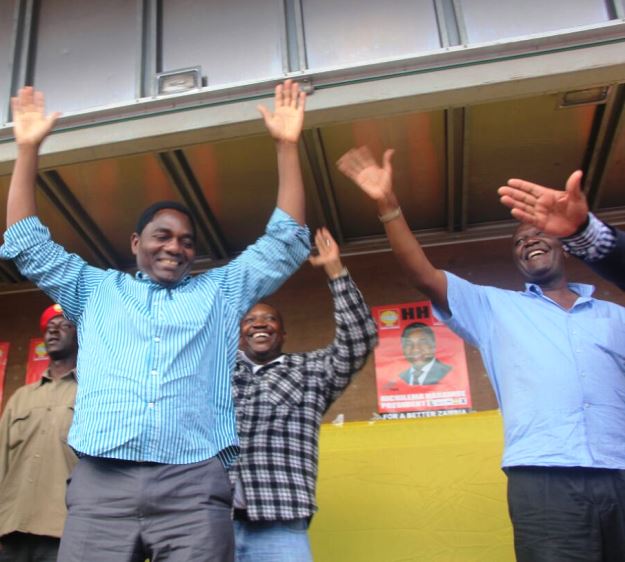

When Hichilema and the UPND Alliance won the 2021 elections, Mutati was again appointed to Cabinet.
He became Minister of Technology and Science in September 2021, entering Parliament once more as a nominated MP.
He held the portfolio through Hichilema’s first administration.
Following the 2026 elections, Mutati returned to the same ministry, with his latest appointment taking effect in October 2026.
At 67, he remains a senior figure in government, having served under three different political administrations: MMD, PF and UPND.
His political journey has also seen him serve under four Presidents: Levy Mwanawasa, Rupiah Banda, Edgar Lungu and Hakainde Hichilema.
The National Assembly’s parliamentary profile records his parliamentary history from Lunte in 2001, 2006 and 2011, followed by nominated membership in 2016, 2021 and 2026.
Mutati and Munkombwe: How similar are their political journeys?
There are clear similarities between the two men, but there are also important differences.
Both have demonstrated an ability to remain relevant after major political transitions.
Both have served under administrations led by different political parties.
Both have held ministerial positions after the parties under which they initially entered Parliament lost elections.
And both have benefited from presidential appointments that allowed them to return to government.
But Munkombwe’s political journey was much longer and more extensive in terms of political organisations.
He participated in the independence movement, served in the UNIP government, moved into the MMD, and later joined the PF administration. His political experience covered almost every major political era from the colonial struggle to the PF years.
Mutati’s journey, meanwhile, is defined by parliamentary longevity, ministerial experience and the ability to remain relevant through changing political alliances.
There is another important difference: Mutati has also led a political party, the MDC, and participated in the formation of alliances that shaped the 2021 and 2026 political contests.
The comparison, therefore, is not about identical political careers. It is about the ability of certain politicians to maintain influence even when the political environment changes.
What makes Mutati so useful to successive Presidents?


This is perhaps the most interesting question.
Is it his experience in public administration? His professional background as an accountant? His understanding of government systems? His political connections? Or his ability to work with different political leaders?
Mutati has held portfolios in finance, energy, commerce, infrastructure and technology. That experience gives him a broad understanding of government and the economy.
His supporters may argue that appointing experienced politicians across party lines is a demonstration of national inclusion and the value of institutional knowledge.
Critics, on the other hand, may question how political loyalties and party identities are reconciled when politicians repeatedly serve governments that previously stood on the opposite side of the political divide.
There is also the question of political accountability. When a politician moves from one administration to another, how should voters assess the policies and decisions made during each period of service?
And what does it say about Zambia’s political culture when some politicians appear to survive almost every change of government?
The politics of survival or the politics of experience?
Daniel Munkombwe’s political journey remains one of the most fascinating chapters in Zambia’s political history.
His autobiography, The Politics of Influence, provides a personal account of the relationships, political negotiations and changing alliances that shaped his career.
Felix Mutati is writing a different chapter, but the questions surrounding his political longevity are strikingly familiar.
Is he simply an experienced public servant who successive Presidents have found useful? Is he a political strategist who understands how to remain relevant? Or is this the kind of political adaptability that has become a feature of Zambian politics?
For Zambian Eye, the question is not whether politicians should serve under different administrations. It is whether such appointments are based on competence, national interest and measurable contribution, and whether the public can hold them accountable for their record.
Daniel Munkombwe made a career out of political influence. Felix Mutati has built a remarkable record of ministerial survival. Are we witnessing the same political art in a different generation?