


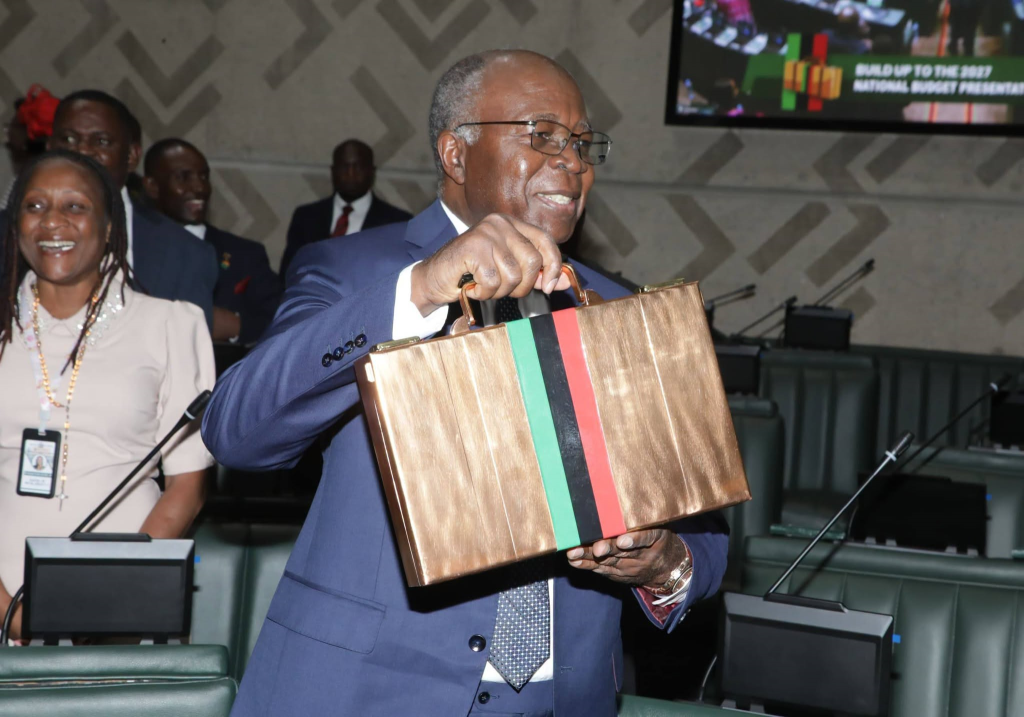
From higher VAT and mobile money charges to changes in farmer support and social cash transfers, the 2027 National Budget presents a major question for ordinary Zambians: will the promise of economic growth translate into better living conditions, or will households carry more of the cost?
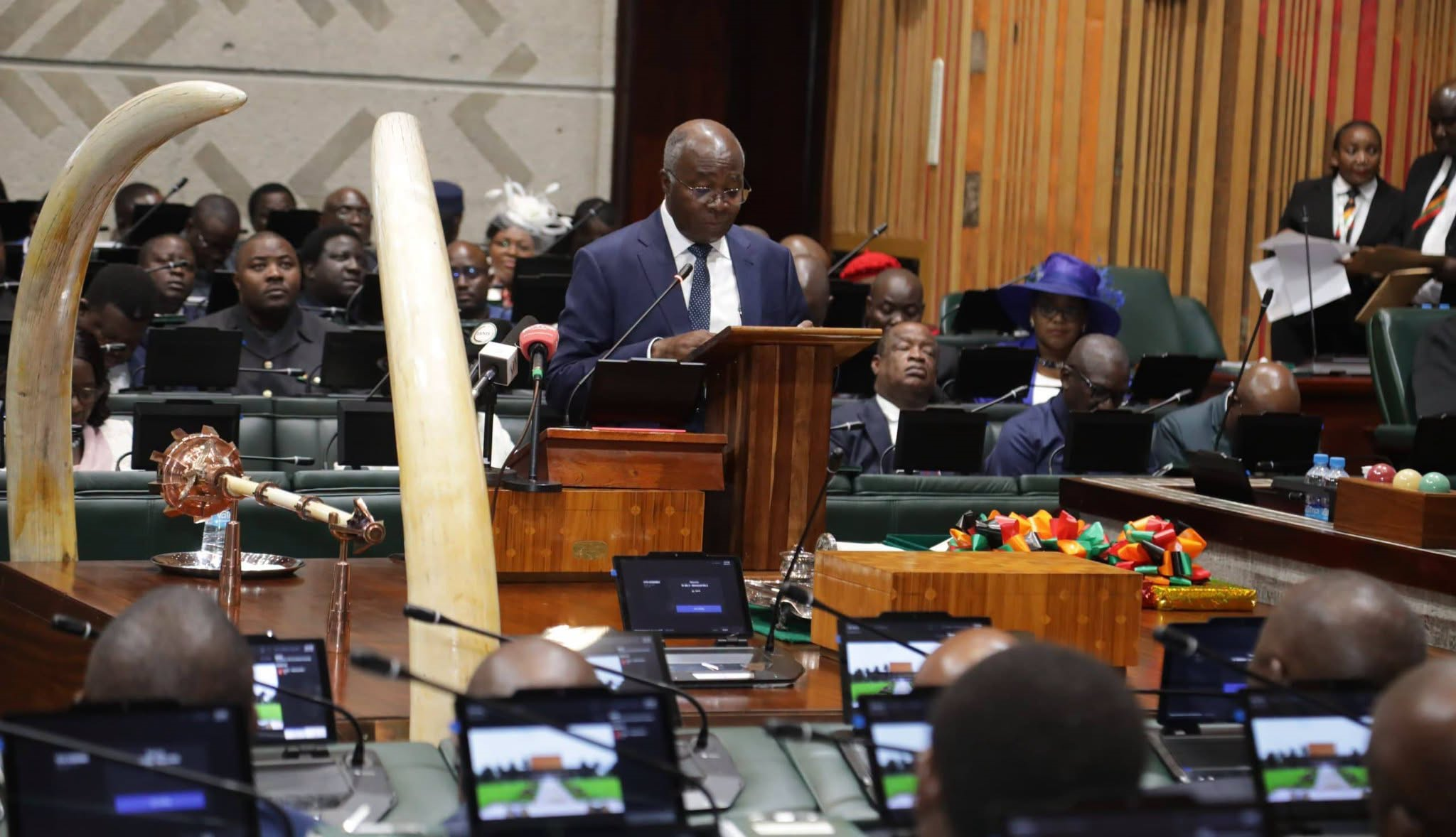
When Finance and National Planning Minister Situmbeko Musokotwane stood before Parliament on Friday, November 6, to present the K284.8 billion 2027 National Budget, the message was one of transition.
After years of economic stabilisation, Government says the country must now move towards faster growth, investment, job creation and improved livelihoods.
The theme says it all: “Grow Zambia: From Stabilisation to Unlocking Opportunities, Creating Jobs and Improving Livelihoods for All.”
But beyond the impressive budget figure and ambitious economic targets lies a more immediate question for millions of Zambians: what does this budget mean for the household that has to buy mealie meal, pay school expenses, send money to relatives, access healthcare or prepare for the next farming season?
For a market trader, a small increase in transaction charges matters. For a family relying on social cash transfers, an additional K50 may provide some relief, but it must stretch across an entire month. For a small-scale farmer, the proposed transition of the Farmer Input Support Programme (FISP) from subsidies to loans could fundamentally change how they prepare for the farming season.
Zambian Eye looks beyond the headline allocation to examine the decisions that could directly affect people’s lives.
K67.6 billion for debt: The money Zambia must first pay back
One of the most striking figures in the 2027 Budget is the K67.6 billion allocated to debt servicing.
This represents approximately 23.7 percent of the entire national budget – almost one kwacha in every four.
Of this amount, K50.8 billion is allocated towards domestic debt, while K16.8 billion is for external debt.
The allocation is more than twice the K30.3 billion set aside for health and significantly higher than the K38.2 billion allocated to education.
The figures illustrate the continuing pressure debt obligations place on public spending.
Government has defended its economic stabilisation and debt restructuring efforts, arguing that these have helped restore confidence, reduce inflation and create a foundation for growth.
However, the human question remains: how much more could be directed towards hospitals, schools, roads, water and social programmes if debt servicing consumed a smaller share of national resources?
The 2027 Budget also allocates K4.7 billion towards dismantling domestic arrears, an indication that outstanding obligations to suppliers and service providers remain part of the fiscal challenge.
VAT rises to 16.5%: What happens at the till?
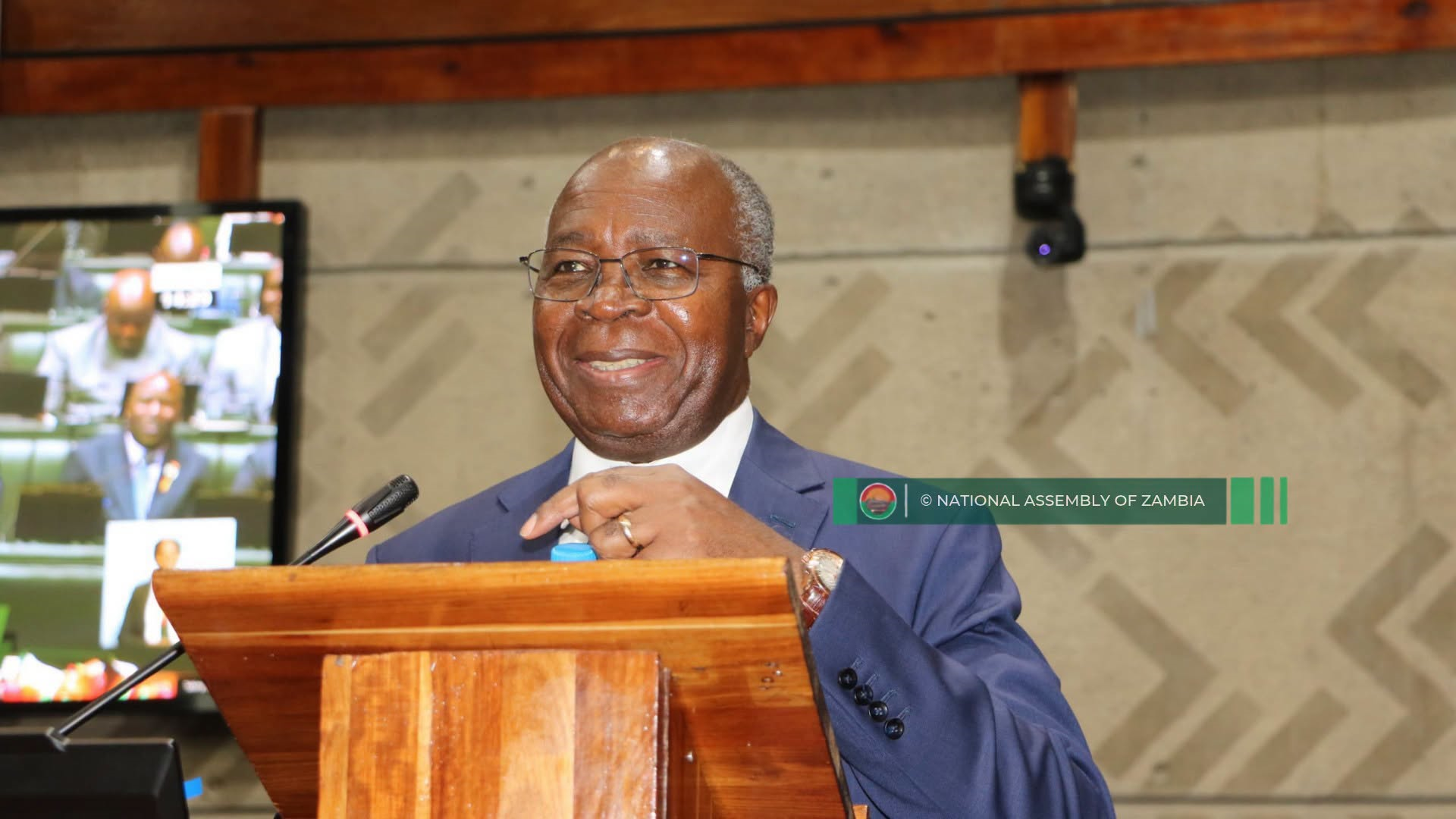
Among the proposed revenue measures is an increase in Value Added Tax (VAT) from 16 percent to 16.5 percent.
The half-percentage-point adjustment may appear small on paper, but VAT is a consumption tax, meaning its effect is felt through the prices of taxable goods and services.
For a household already balancing food, transport, electricity, rent and school expenses, even relatively small price adjustments can add pressure.
Government says the adjustment is part of efforts to strengthen domestic revenue mobilisation and raise resources for national development.
The wider question is whether improved revenue collection will translate into better services and opportunities for the people paying the tax.
The budget also introduces an excise duty of K1 per kilogramme on sugar, as well as a 20 percent excise duty on chocolate and sugar confectionery.
The impact of these measures on final retail prices will depend on how manufacturers, importers and retailers respond.
Mobile money: Another cost for ordinary transactions
Mobile money has become an important part of daily economic life in Zambia.
It allows marketeers to receive payments, families to send money to relatives, small businesses to pay suppliers and people in remote communities to access financial services.
The 2027 Budget proposes increasing the mobile money levy across all transaction bands.
The Minister did not provide the revised amounts in the main announcement, but the proposal is included among the non-tax revenue measures expected to contribute to the Government’s revenue target.
For someone making occasional large transfers, the impact may be different from that experienced by a trader who conducts several small transactions every day.
The concern is that additional transaction costs could make digital payments more expensive for people who depend on mobile money because they have limited access to conventional banking services.
The revised bands and actual charges will be important in determining the extent of the impact.
Farmers face a major change to FISP
Perhaps one of the most consequential policy changes in the budget concerns the Farmer Input Support Programme.
Government has announced that FISP will transition from its traditional subsidy-based arrangement into an agricultural loan scheme, with implementation expected to begin in 2027.
The Minister said the programme would be redesigned to broaden access to agricultural financing and return to what he described as its original intention.
The Government has allocated K9.1 billion to FISP within the broader K22.7 billion allocation for agriculture, fisheries and livestock programmes.
The change could reshape the relationship between Government and small-scale farmers.
Under a subsidy arrangement, beneficiaries receive support towards farming inputs without the same repayment obligation associated with a loan.
Under a loan scheme, however, farmers will need to understand the borrowing conditions, repayment arrangements, eligibility requirements and consequences of default.
For a farmer in a rural community whose income depends heavily on rainfall, market prices and the success of one farming season, taking on a loan introduces a different level of financial responsibility.
What happens if the rains fail? What happens if the farmer produces a good harvest but struggles to find a market or receives a low price?
These are questions that must be answered before the new arrangement is fully implemented.
Government has said it will develop the implementation modalities. The details will therefore be critical in determining whether the new scheme expands access to finance or creates additional risks for vulnerable farmers.
K450 social cash transfer: K15 a day
The 2027 Budget proposes increasing the monthly Social Cash Transfer from K400 to K450 for eligible households.
Households with eligible persons with disabilities are proposed to receive K650 per month.
Government plans to spend K10.4 billion on the programme, supporting more than 1.6 million beneficiary households, up from approximately 1.5 million in the 2026 Budget.
The increase of K50 translates to approximately K1.67 per day.
At the proposed K450 monthly rate, a household has about K15 per day to meet its needs.
For vulnerable families, this support is important. It can help with food, basic household necessities and other essential expenses.
But the question is whether the increase is sufficient in an environment where households continue to face competing demands and rising costs.
The budget also proposes incorporating contributions towards the National Health Insurance Scheme into the Social Cash Transfer programme and integrating the Food Security Pack into other existing social protection programmes.
The effectiveness of these measures will depend on how well they are implemented and whether beneficiaries receive the support without unnecessary delays.
Health and education: What does the budget provide?
Education receives K38.2 billion, representing approximately 13.4 percent of the national budget.
Health has been allocated K30.3 billion, equivalent to approximately 10.6 percent.
These are substantial allocations, but the real measure of success will be what they deliver.
For education, parents and learners will want to see whether resources translate into adequate teaching materials, classroom infrastructure, teacher availability and improved learning conditions under the Free Education Policy.
For health, the concerns are familiar: availability of medicines, medical equipment, staffing levels, functioning health facilities and access to essential services.
A budget allocation is not the same as money reaching a school or hospital on time.
The public will therefore be watching how the allocations are released, spent and accounted for throughout 2027.
Higher charges for passports and civil registration
The budget also proposes introducing and revising selected passport fees, travel document charges and civil registration fees.
Other permit charges, including residence, employment, investor, visiting and temporary employment permits, are also expected to increase.
These measures are part of Government’s efforts to increase non-tax revenue.
For citizens seeking passports, birth certificates and other official documents, however, the changes could increase the cost of accessing essential government services.
The actual impact will become clearer once the revised fee schedules are published.
A higher tax on mining dividends: Will the benefits reach Zambians?
One measure that could attract support from those calling for greater benefits from the mining sector is the proposed increase in withholding tax on dividends paid by mining companies.
Government proposes raising the rate from zero percent to 15 percent.
This is intended to align the treatment of mining dividends with that of companies in other sectors.
The proposal comes at a time when copper prices have reached historic highs, presenting an opportunity for Zambia to increase the benefits it receives from its mineral resources.
The question is whether the additional revenue will be directed towards visible improvements in public services and the livelihoods of communities affected by mining activities.
Zambia has long debated how to ensure that the country’s mineral wealth translates into better living standards for its citizens.
The proposed tax is one step in that debate, but its actual contribution will depend on the dividends declared, tax collected and how the resulting revenue is used.
More money for investment, infrastructure and business
The budget is not entirely about higher taxes and debt obligations.
Government has allocated K75.9 billion to economic affairs, including K22.7 billion for agriculture, fisheries and livestock.
Road infrastructure receives K18.1 billion for construction, rehabilitation, maintenance and upgrading, including feeder and intra-district roads.
Government also plans to support small businesses through a K5 billion guarantee scheme to improve access to finance.
In energy, the Government is targeting the addition of more than 1,400 megawatts of electricity generation capacity to the national grid in 2027, with emphasis on diversifying energy sources.
The private sector is expected to play a central role in driving investment and production.
The Minister also outlined plans to attract investors into large-scale agricultural production along the TAZARA and Lobito railway corridors, with the intention of linking small-scale farmers to commercial value chains.
These initiatives could create jobs and expand economic opportunities if they are implemented effectively.
But for ordinary citizens, the important measure will be whether the promised investment produces employment, better incomes, affordable services and opportunities for local businesses.
Fred M’membe’s first reaction: “Who does the budget serve?”
The proposed budget has already attracted political reaction.
Socialist Party President Fred M’membe issued what he described as his first reaction shortly after the presentation, saying a detailed assessment would follow.
He questioned the allocation towards debt servicing, the proposed tax increases, the FISP transition and the adequacy of the Social Cash Transfer increase.
M’membe argued that the debt allocation was disproportionately high compared with health and education spending.
He also criticised the proposed VAT and mobile money levy increases, saying the measures would place additional pressure on ordinary people.
On agriculture, he warned that changing FISP into a loan scheme could leave small-scale farmers with additional financial obligations before they even begin planting.
He described the proposed K450 monthly Social Cash Transfer as equivalent to K15 per day for a household.
However, he welcomed the proposed 15 percent withholding tax on mining dividends, describing it as an overdue step towards ensuring that mining companies contribute more to national revenue.
M’membe also questioned the Government’s emphasis on private-sector-led growth and foreign investment, arguing that the budget appeared to prioritise lenders and investors over ordinary Zambians.
His assessment represents the Socialist Party leader’s political and economic interpretation of the budget. A detailed examination of the expenditure, revenue measures and implementation proposals will be necessary to assess the wider implications.
The bigger question: Can growth improve household incomes?
The Government has set a target of at least 4.9 percent economic growth in 2027, while aiming to reduce the fiscal deficit to 3 percent of GDP and maintain inflation within the 6–8 percent target range.
The Minister argues that the country is moving from stabilisation towards a period of accelerated growth.
That ambition is important.
But economic growth must eventually translate into jobs, better incomes, affordable food, improved healthcare, quality education and more opportunities for businesses.
For the young graduate looking for employment, growth figures mean little without a job.
For the market trader, improved economic performance must translate into stronger purchasing power among customers.
For the farmer, agricultural transformation must mean access to affordable inputs, reliable markets and fair returns.
For a pensioner or vulnerable household, economic stability must be reflected in the ability to afford basic necessities.
This is where the 2027 Budget will ultimately be judged.
Zambian Eye’s perspective: Follow the money, measure the impact
The 2027 Budget presents a clear economic direction. Government wants to expand production, attract investment, increase exports and create jobs while maintaining fiscal discipline.
However, the distribution of the cost and benefits deserves close public scrutiny.
The K67.6 billion debt allocation, proposed consumption and transaction taxes, changes to farmer support and the relatively modest increase in social cash transfers all raise important questions about who carries the burden of economic adjustment.
At the same time, the proposed mining dividend tax, infrastructure spending, business financing initiatives and investments in energy and agriculture offer opportunities that should be assessed on their implementation and results.
As Zambian Eye continues its examination of the budget, the focus will remain on what the figures mean beyond Parliament: in homes, markets, farms, schools, hospitals and workplaces.
Because a national budget is not simply an accounting document.
It is a statement of priorities – and ultimately, a measure of how public resources are expected to improve the lives of the people.