
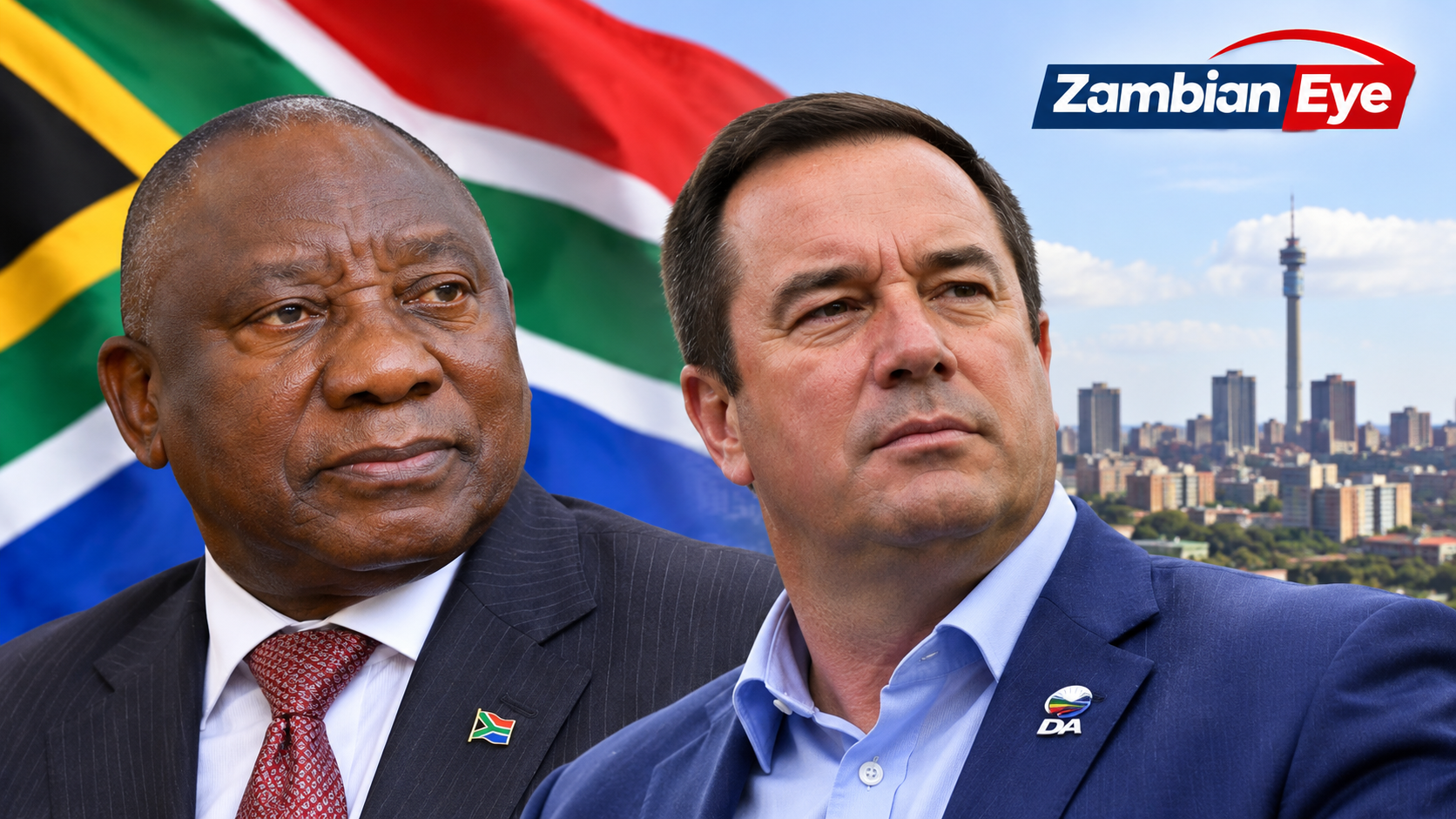
South Africa’s political landscape has undergone another major shift after the ruling African National Congress (ANC) suffered its worst electoral performance in the country’s democratic era, securing just 30.76% of the vote in the 2026 local government elections.
The final results announced by the Electoral Commission of South Africa (IEC) on Sunday, November 8, show the ANC retaining its position as the country’s largest political party nationally, but with a significantly reduced share of the vote.
The Democratic Alliance (DA) came second with 24.64%, while former President Jacob Zuma’s uMkhonto weSizwe (MK) Party secured 9.76%.
The Economic Freedom Fighters (EFF) received 6.22%, while ActionSA secured 5.67%.
The results represent a substantial decline for the ANC, which secured 45.59% in the 2021 local government elections. The party has now lost almost 15 percentage points of its support in five years.
For a party that led South Africa out of apartheid and dominated the country’s politics for three decades, the latest outcome represents another major electoral setback.
DA makes gains in five major metropolitan areas
One of the most significant developments in the elections is the DA’s performance across South Africa’s metropolitan municipalities.
The party emerged as the leading political party in five of the country’s eight metros: Johannesburg, Tshwane, Ekurhuleni, Nelson Mandela Bay and Cape Town.
In Johannesburg, the DA secured 34.79%, ahead of the ANC’s 20.25%. ActionSA came third with 16.27%.
In Tshwane, the DA received 34.37%, followed by ActionSA at 22.07% and the ANC at 20.22%.
In Ekurhuleni, the DA secured 30.68%, while the ANC received 22.11% and ActionSA 18.50%.
The DA also retained Cape Town with 56.42%, giving it an outright majority in the metropolitan council.
In Nelson Mandela Bay, the party received 44.17%, putting it ahead of the ANC’s 25.48%.
However, leading in the vote does not automatically mean controlling a council. Apart from Cape Town, the DA will need coalition partners to govern the other four metros where it emerged as the largest party.
The MK Party also made a significant showing, emerging as the leading party in eThekwini, the metropolitan municipality that includes Durban, with 38.29% of the vote.
The ANC retained the lead in Buffalo City and Mangaung, although neither result represents a return to its previous dominance.
What happened to the ANC?
The ANC’s decline has been building over several election cycles.
In the 2024 national elections, the party lost its parliamentary majority for the first time since the end of apartheid, forcing it into a Government of National Unity with other political parties.
The 2026 local government results suggest that the challenge is now extending deeper into municipal politics.
Service delivery has been a major issue in the elections.
Communities across South Africa have raised concerns about water shortages, electricity interruptions, deteriorating roads, poor sanitation, uncollected rubbish and inadequate municipal services.
These issues have increasingly become central to how voters assess political parties and their performance in government.
The ANC’s own Secretary-General, Fikile Mbalula, described the election outcome as “catastrophic” and acknowledged that the party needed to put its house in order.
President Cyril Ramaphosa, meanwhile, called on political parties to approach coalition negotiations with humility and put the interests of the public first.
Coalition politics: Who will govern the cities?
The election results have created a complicated political environment, with coalition negotiations expected to determine the leadership of many municipalities.
According to the Mail & Guardian’s analysis of the final results, the number of hung councils has risen to 142, compared with 70 in the 2021 local government elections.
A hung council occurs when no political party secures enough seats to govern with an outright majority.
This means smaller political parties could have considerable influence in determining who becomes mayor and which parties form municipal administrations.
Johannesburg is among the most closely watched contests.
Although the DA emerged as the largest party, it fell short of an outright majority. ActionSA, which secured 16.27%, will be an important player in negotiations.
However, ActionSA leader Herman Mashaba has indicated that his party will not support the DA if Helen Zille is its mayoral candidate.
The ANC and DA could also explore cooperation, although their differences on policy and political priorities could make negotiations difficult.
The outcome of these discussions will determine whether South Africa’s major cities secure stable administrations or face further political uncertainty.
A changing political era in South Africa
The 2026 local government elections demonstrate how significantly South Africa’s political environment has changed.
The ANC remains the largest political party nationally, but its declining support shows that its historical dominance can no longer be taken for granted.
The DA has strengthened its position in several important metropolitan areas, while the MK Party and ActionSA have added to an increasingly fragmented political landscape.
For ordinary South Africans, however, the real test will not simply be which party controls a municipality.
It will be whether the incoming administrations can improve access to water, restore reliable electricity, maintain roads, improve sanitation and create communities where basic services work.
The elections have delivered a clear message about the changing balance of political power. The next challenge is turning that electoral message into better governance and improved living conditions.