


FROM NAKATINDI WINA TO ESTHER MWITUMWA

A treason charge against Esther Mwitumwa, daughter of former Zambian diplomat Ambassador Martha Mwitumwa-Lungu, has reopened an important chapter in the country’s political history, bringing renewed attention to the rare cases in which women have faced one of the most serious criminal allegations under Zambian law.
Mwitumwa was formally served with a treason charge on Thursday morning, November 5, following a period of detention that has already generated legal controversy over her custody and the role of the courts.
According to information provided about the latest development, officers led by Mr Makokwani administered a warning and caution statement to her at approximately 10:00 hours before formally serving her with the charge.
Police allege that between November 2025 and October 2026, she conspired to overthrow the Government of the Republic of Zambia.
The allegation remains untested in court, and Mwitumwa is entitled to the presumption of innocence.
But beyond the charge itself, her case raises a wider question: how often have Zambian women found themselves facing treason allegations in the country’s political history?
A woman charged with treason in 1998
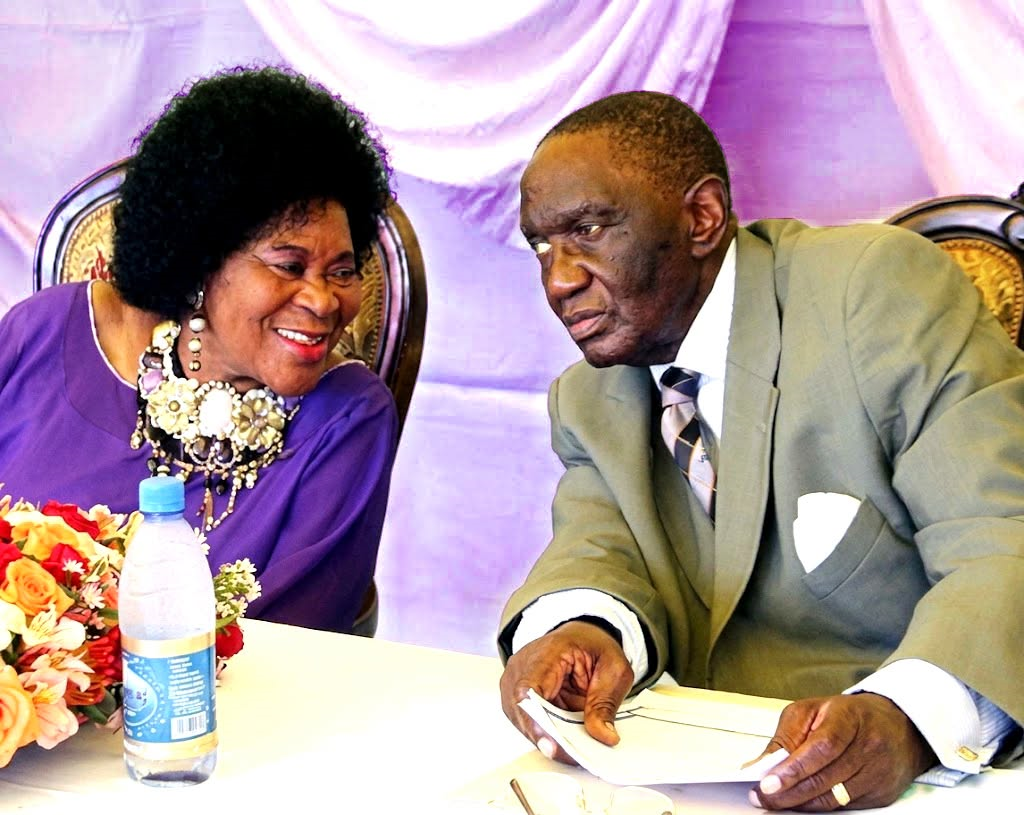
One clearly documented historical precedent is the case of Princess Mirriam Nakatindi Wina, a senior political figure during the administration of former President Frederick Chiluba.
Wina was the MMD National Chairperson for Women’s Affairs and a Member of Parliament when she was detained by police on January 28, 1998, following the attempted military coup of October 1997.
According to a Human Rights Watch report published in May 1998, her arrest followed a speech she had delivered at a pro-government rally on October 30, 1997, in which she said she had warned President Chiluba about the possibility of a coup plot.
Authorities apparently interpreted her remarks as suggesting that she had prior knowledge of the alleged plot.
She was subsequently held at Mukobeko Maximum Security Prison in Kabwe and later admitted to Maina Soko Military Hospital, where she was receiving treatment for health complications.
On March 5, 1998, Wina was formally charged with treason while in her hospital bed.
Her case became part of the wider controversy surrounding the government’s response to the 1997 attempted coup, which resulted in the detention and prosecution of several political figures and military personnel.
Human Rights Watch documented concerns about her health, detention and treatment, including the decision to return her to Mukobeko despite continuing medical complications.
The historical significance is striking. Almost 28 years later, another Zambian woman, Esther Mwitumwa, is facing a treason charge in a politically charged environment.
The available historical records establish Wina as an earlier documented female treason accused. They do not, however, provide a complete national register from which to establish the total number of women ever charged with treason.
Esther Mwitumwa and the Tonse-Pamodzi connection
Mwitumwa is not an unknown figure in the political developments surrounding the August 13, 2026 general elections.
She reportedly served in the secretariat of the Tonse-Pamodzi Alliance and handled administrative responsibilities connected to the alliance’s campaign.
Her mother, Ambassador Martha Mwitumwa-Lungu, is a former Zambian diplomat who served as Zambia’s Permanent Representative to the United Nations Office at Geneva and as ambassador from 2019 to 2021.
The former diplomat was herself caught up in the political tensions surrounding the election campaign.
On August 9, Zambian Eye reported that police had detained Ambassador Mwitumwa-Lungu and campaign blogger Hannah Isreal Katontoka at the Mundubile campaign media centre in Longacres.
Caritas Zambia subsequently raised concerns about the whereabouts and due process of the two women, calling on authorities to inform families where detained persons were being held and to respect constitutional safeguards.
The government later said the two women had been taken into custody to assist with investigations and had been released.
Esther’s present case therefore places a second member of the Mwitumwa family in the spotlight of the post-election legal and political developments.
Her reported connection to the Tonse-Pamodzi campaign is relevant to understanding the political context, but it does not establish guilt or prove the allegation against her.
Detention, habeas corpus and the court controversy
The circumstances surrounding Esther’s detention have also raised questions about the relationship between law enforcement authorities and judicial orders.
A report published on October 31 by The Zambian Observer, quoting claims attributed to legal representatives and eyewitnesses, said Esther had initially been detained during the previous week and held on a treason allegation.
The report further said that the Lusaka High Court, presided over by Justice G.C. Mulenga, granted a writ of habeas corpus and ordered her immediate release.
It subsequently alleged that police officers took her into custody again outside the court premises.
These claims have not been independently established through the court order or a police account available to Zambian Eye. They nevertheless raise questions that require clarification from the relevant authorities.
Habeas corpus is a legal procedure through which a detained person can be brought before a court so that the authority and legality of the detention can be examined.
The latest formal charge does not, by itself, resolve questions about whether the earlier detention and the handling of the court order complied with the law.
The exact date of Esther’s initial arrest and the precise periods during which she was held or released have not been independently confirmed. It is therefore not possible to give a reliable total number of days in custody at the time of publication.
Mundubile and the treason case still awaiting its day in court
Esther’s case is unfolding against the background of another major treason matter involving opposition presidential candidate Brian Mundubile, his running mate Makebi Zulu and other people connected to the opposition campaign.
Mundubile and Zulu were arrested on August 27 and formally charged with treason on August 29, 2026.
The case eventually involved 18 accused persons.
In September, Zambian Eye reported that the accused had remained in detention without appearing before a court on the treason allegations, while the Law Association of Zambia raised concerns about prolonged detention and the constitutional right to be brought before a competent court without undue delay.
The Director of Public Prosecutions, Gilbert Phiri, had said investigations were continuing and that the suspects would be taken to court once investigations were concluded.
Human Rights Watch, in a report published on November 1, also stated that Mundubile, Zulu and the other men detained in connection with the August 14 operation remained in detention without trial or an appearance before court on the treason allegations.
As of November 5, it is approximately 70 days since Mundubile’s arrest and 68 days since the formal treason charge. The allegations have yet to be tested in a treason trial.
The prolonged detention has become a major legal and constitutional issue, particularly because treason is a non-bailable offence under the relevant provisions of Zambian law.
The comparison with Esther’s case is important, although the circumstances and individual legal proceedings should not be treated as identical.
Both cases raise questions about how long people accused of serious offences can remain in custody before the allegations are presented and tested through the judicial process.
What does the law require?
The Constitution of Zambia protects the liberty of individuals and provides safeguards for people who are arrested or detained.
Article 13 addresses protection of personal liberty, including the requirement that a person arrested or detained on suspicion of committing an offence be brought before a court without undue delay.
The seriousness of a criminal allegation does not remove the obligation of law enforcement authorities to respect constitutional protections.
The distinction is important: a person can be investigated and charged, but the allegation must ultimately be examined through the judicial process.
For Esther, the immediate questions include the evidence supporting the alleged conspiracy, the circumstances of her initial detention, the High Court proceedings and the next steps following the formal charge.
For the Mundubile group, the central question remains when the treason allegations will be brought before a competent court for proceedings to begin.
A wider question about women, politics and the justice system
Esther Mwitumwa’s case has significance beyond her family background or reported political role.
It brings into focus the experiences of women who become involved in high-stakes political disputes and subsequently find themselves facing serious criminal allegations.
The case of Nakatindi Wina in 1998 shows that women have previously been caught up in treason investigations arising from periods of political tension.
The circumstances are different, but the historical connection is worth examining.
For Zambian Eye, the issue is not whether a person should be shielded from prosecution because of gender, political affiliation or family connections. No one is above the law.
The equally important principle is that no one should be deprived of constitutional protections because of their political involvement, gender or the seriousness of an allegation.
As Esther Mwitumwa prepares to answer the treason charge, attention will turn to the evidence, the court process and whether the authorities can demonstrate that the law is being applied transparently and fairly.
The questions surrounding her detention, the historical precedent of Nakatindi Wina and the continuing wait for the Mundubile treason case to reach court make this a development that goes well beyond one individual’s prosecution.