
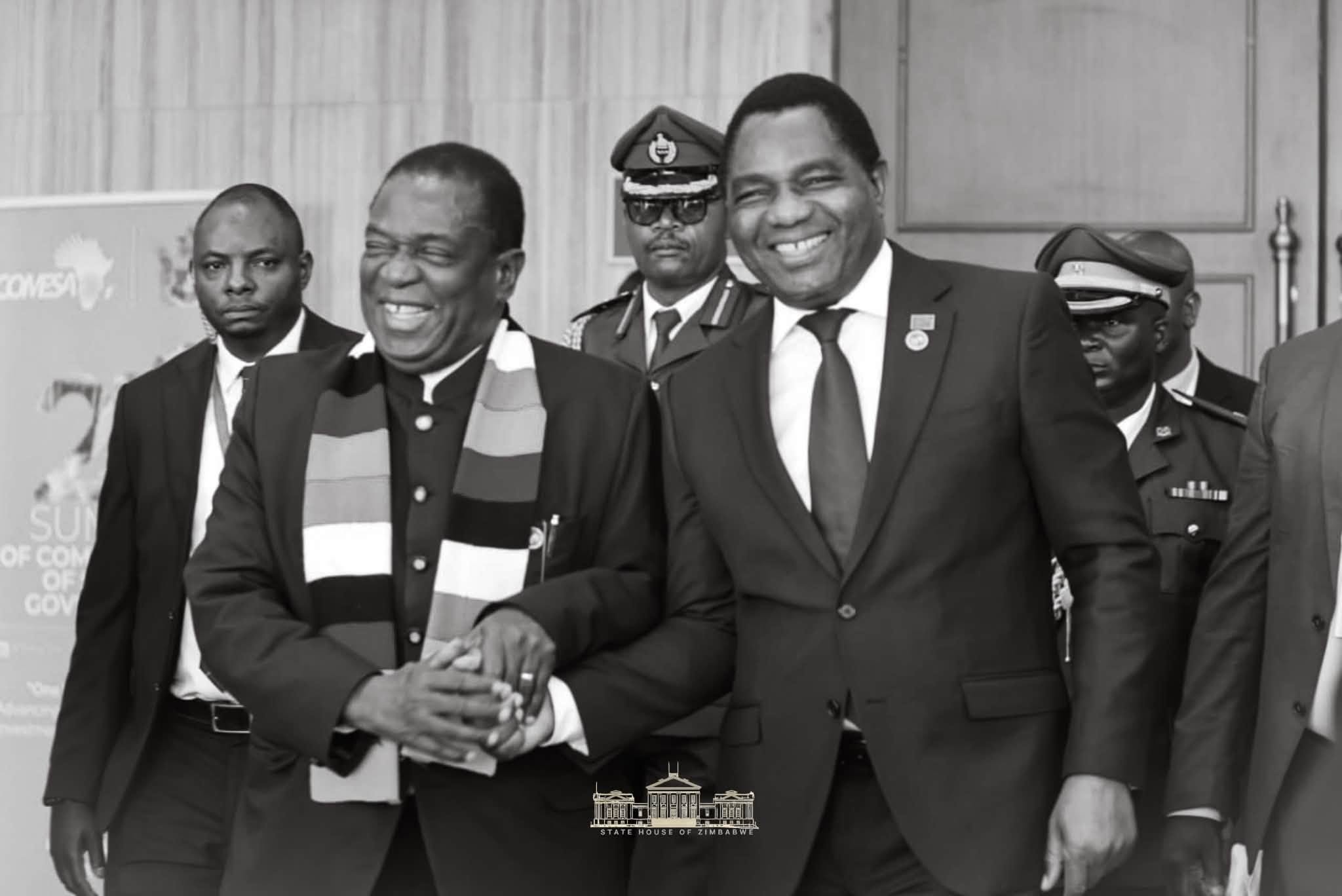
Zambia’s President Hakainde Hichilema is in Harare for the COMESA Summit, returning to a country where his relationship with President Emmerson Mnangagwa was strained for years. His latest visit raises questions about what has changed between the two leaders and what closer relations could mean for Zambia.
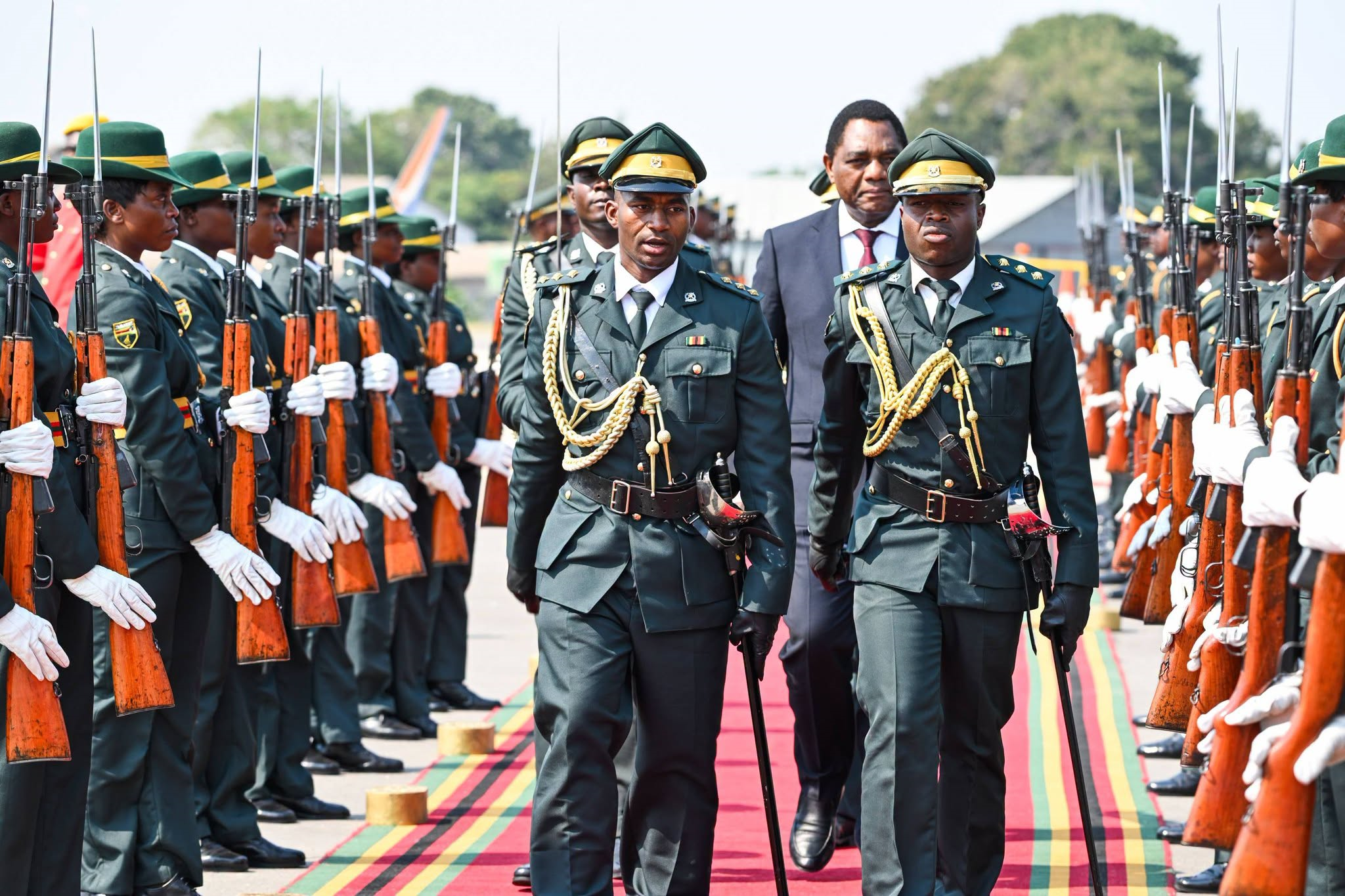
HARARE, Zimbabwe – President Hakainde Hichilema’s arrival in Harare for the 25th Common Market for Eastern and Southern Africa (COMESA) Summit brings him face-to-face once again with his Zimbabwean counterpart, Emmerson Mnangagwa, after years of diplomatic unease between the neighbouring countries.
The summit, scheduled for Thursday, October 22, 2026, is being hosted by Mnangagwa under the theme of advancing inclusive industrialisation, investment and regional integration.
But beyond the official agenda, Hichilema’s presence in Harare carries a wider diplomatic significance.
For much of his first term, relations between the two presidents were widely viewed as frosty, with disagreements over Zimbabwe’s disputed 2023 elections, regional diplomacy and Mnangagwa’s close relationship with Hichilema’s predecessor, the late Edgar Lungu, contributing to tensions.
That atmosphere began to change in November 2025, when Hichilema undertook a state visit to Zimbabwe and co-chaired the inaugural session of the Zambia–Zimbabwe Bi-National Commission with Mnangagwa.
Their renewed engagement raises an important question: has the relationship between the two leaders moved from political suspicion to practical cooperation, and what does that mean for Zambia?
From diplomatic frost to renewed engagement
When Hichilema became President in August 2021, relations with Zimbabwe were complicated by political differences and the longstanding ties between Mnangagwa and Lungu.
The relationship became more visibly strained after Zimbabwe’s August 2023 elections, which returned Mnangagwa to office amid controversy over the credibility of the electoral process.
Hichilema did not attend Mnangagwa’s inauguration that year. His government’s role in regional discussions about Zimbabwe’s elections also attracted criticism from Harare.
The tensions continued into 2024, when Hichilema did not personally attend the 44th SADC Summit in Harare on August 17. Zambia was represented by Foreign Affairs and International Cooperation Minister Mulambo Haimbe.
The absence was notable because Hichilema was serving as chairperson of the SADC Organ on Politics, Defence and Security Cooperation, which had responsibilities relating to regional peace and security.
However, the official summit communiqué acknowledged his leadership of the Organ and his continued efforts to promote peace and security in the region. His absence from the meeting should therefore be distinguished from an absence of Zambia from the summit itself.
Relations reached another difficult moment in 2024 when Mnangagwa was reported to have made remarks about Zambia in a hot-microphone exchange during a regional engagement. The episode added to perceptions of mistrust between the two administrations.
For neighbouring countries with longstanding social, economic and historical ties, such tensions have implications beyond the personal relationship between presidents.
Zambia and Zimbabwe share important trade routes, energy infrastructure, border communities and transport corridors. Prolonged diplomatic difficulties can complicate efforts to resolve practical problems affecting businesses and citizens.
November 2025: The moment relations began to change
A significant turning point came on November 14, 2025, when Hichilema visited Harare for the inaugural session of the Zambia–Zimbabwe Bi-National Commission.
It was his first state visit to Zimbabwe since taking office in 2021.
The commission, which elevated the previous Joint Permanent Commission on Cooperation to a higher framework of bilateral engagement, was designed to strengthen cooperation in trade, energy, infrastructure, mining, agriculture and security.
Mnangagwa described Hichilema’s visit as historic and called for the two governments to pursue practical cooperation with urgency.
Hichilema, in turn, emphasised the longstanding relationship between the peoples of the two countries and argued that Zimbabwe’s economic difficulties, including Western sanctions, had implications for Zambia as well.
The visit was accompanied by agreements and commitments covering several areas of cooperation, including agriculture and immigration.
The two governments also discussed improvements to border management, including extending operating hours at the Victoria Falls crossing and advancing plans for more efficient movement of goods and people.
These were significant issues for Zambia, whose businesses depend on reliable regional transport links and access to neighbouring markets.
The meeting suggested that both governments were prepared to place shared economic interests ahead of earlier political disagreements.
What has changed between Hichilema and Mnangagwa?
 It would be premature to conclude that every disagreement between the two leaders has disappeared.
Their relationship has, however, moved into a more cooperative phase, at least at the official level.
The November 2025 Bi-National Commission provided a formal mechanism for the two governments to address outstanding disputes and pursue shared priorities.
Hichilema’s attendance at the COMESA Summit now offers another opportunity to deepen that engagement.
For Mnangagwa, hosting the summit gives Zimbabwe an opportunity to demonstrate its role in regional economic integration and strengthen its diplomatic relationships.
For Hichilema, participation provides an opportunity to advance Zambia’s trade and investment interests while maintaining constructive relations with a strategically important neighbour.
The change is particularly relevant because political differences between governments do not necessarily have to prevent cooperation on economic matters.
The real test will be whether the improved diplomatic atmosphere translates into measurable results for citizens and businesses.
Why the COMESA Summit matters to Zambia
COMESA brings together 21 member states and seeks to promote regional economic integration through trade, investment and cooperation.
Zambia is not merely participating as a member state. Lusaka hosts the COMESA Secretariat, making the organisation an important part of the country’s regional diplomatic and economic engagement.
The Harare summit is expected to consider priorities including industrialisation, regional value chains, investment and the removal of barriers to trade.
For Zambia, these issues have direct economic implications.
Businesses need predictable border procedures, reliable transport infrastructure and access to regional markets. Manufacturers and agricultural producers also benefit when regional supply chains become more efficient and trade restrictions are reduced.
Energy cooperation is another important area. Zambia and Zimbabwe have a shared interest in strengthening electricity connections and improving the reliability of regional power supplies.
Closer bilateral relations could make it easier for the two governments to coordinate on such issues, although practical improvements will depend on implementation rather than diplomatic statements alone.
Hichilema’s participation therefore provides an opportunity to reinforce both Zambia’s regional commitments and its bilateral relationship with Zimbabwe.
A wider question about presidential summit attendance
Hichilema’s presence in Harare also comes amid public interest in his participation in international and regional meetings.
During his first term, the President attended several major international engagements, while Zambia was represented by ministers or other officials at some high-profile regional summits.
The 2024 SADC Summit in Harare is one example. Hichilema did not attend personally, but Zambia was represented by Haimbe, and the summit formally acknowledged Hichilema’s work as chairperson of the SADC Organ on Politics, Defence and Security Cooperation.
The distinction matters because a president’s absence from a particular meeting does not necessarily mean that the country has withdrawn from the regional process.
Nevertheless, presidential attendance can carry political and diplomatic significance, particularly when a summit is hosted by a leader with whom relations have been strained.
The key question is not simply how many meetings a president attends, but whether Zambia’s participation advances its national interests, strengthens regional cooperation and produces results.
A complete assessment of Hichilema’s summit attendance would require a verified record of the meetings held during his first term, distinguishing full summits from extraordinary meetings, bilateral visits and other international engagements.
Without that record, assigning a numerical total would risk creating a misleading picture of his diplomatic activity.
Will warmer relations produce tangible results?
The improved engagement between Hichilema and Mnangagwa creates an opportunity for both countries, but it also raises expectations.
The commitments made through the Bi-National Commission will matter only if they lead to more efficient border crossings, stronger trade, improved transport links, practical energy cooperation and greater investment.
For ordinary citizens, better relations should mean fewer obstacles for traders, improved movement across borders and greater economic opportunities.
For Zambia, the relationship is particularly important because Zimbabwe is a neighbouring country and a key part of regional transport and commercial networks.
The COMESA Summit provides another platform for the two governments to pursue those interests while contributing to the wider goal of regional integration.
Hichilema’s return to Harare is therefore more than a routine presidential trip. It reflects a diplomatic relationship that has evolved from years of political tension towards renewed engagement.
Whether that change becomes a lasting improvement will depend on what follows the handshakes, meetings and agreements.
For now, the two neighbours appear to have recognised that their shared economic and strategic interests are too important to be overshadowed indefinitely by political differences.