


Reports have emerged that former Petauke Central Member of Parliament Emmanuel Jay Jay Banda was seized by suspected Zambia State security operatives from a location near the Mozambique-Zimbabwe border on Wednesday evening, raising fresh questions about his whereabouts and safety.
Emmanuel Mwamba, a senior Tonse Pamodzi Alliance official who is in exile in the United States and says he had been in contact with Banda, claims that operatives using three vehicles arrived at the location between 19:00 and 21:00 hours.
According to Mwamba’s account, Banda was outside his house talking on the phone when the operatives arrived. He alleges that the former lawmaker was bundled into one of the vehicles and driven away.
Mwamba has not confirmed where Banda was taken and says he could not establish whether the former MP was alive following the reported operation.
The claims had not been independently verified by Zambian Eye at the time of publication. Zambian authorities had not publicly confirmed the reported arrest, while no official account from Mozambican or Zimbabwean authorities had been established.
The uncertainty has prompted concern among Banda’s political associates and supporters, some of whom fear that his safety could be at risk. Those concerns remain unverified, and there is no independently confirmed information establishing that he has been harmed.
What Emmanuel Mwamba says happened
Mwamba’s account places the alleged operation at a location he describes as being between Mozambique and Zimbabwe.
He says the operatives arrived in three vehicles during the evening and took Banda away after finding him using geolocator outside his house.
However, several critical details remain unclear. The precise location of the operation has not been independently established, the identities and affiliations of the people involved have not been confirmed, and it is not known whether Banda was formally arrested by law enforcement officers or taken by people whose authority has not been established.
It is also unclear whether the former MP was taken into custody in Mozambique, Zimbabwe or another location.
The distinction matters because a formal arrest by a country’s law enforcement agencies is different from an alleged seizure by unidentified operatives. Establishing which occurred would help clarify the legal process that should follow and which authorities are responsible for accounting for Banda’s whereabouts.
At the time of publication, Zambian Eye had not obtained independent confirmation of the operation or the former MP’s current location.
Why Banda’s disappearance from custody in 2024 matters
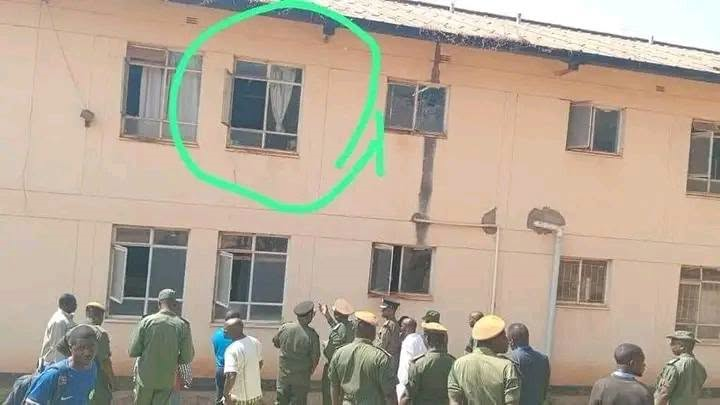
Banda’s legal troubles and disappearance from custody have been a major political and legal issue in Zambia since 2024.
On June 20, 2024, the Zambia Police Service formally arrested him on charges that included aggravated robbery and attempted murder. He was subsequently held in custody in Eastern Province while awaiting further proceedings.
On August 5, 2024, the Ministry of Home Affairs and Internal Security announced that Banda had escaped from lawful custody while receiving medical attention at Chipata General Hospital. Authorities said he had been under the supervision of police officers and correctional officers when he escaped.
The escape triggered a manhunt and investigations into how a person facing serious criminal charges had left custody. Several officers and Banda’s wife were subsequently accused of allegedly aiding his escape. Those allegations were matters for the legal process and should not be treated as proof of guilt.
The episode also generated wider questions about prison and hospital security, accountability among officers responsible for detainees and the ability of law enforcement agencies to secure the return of a wanted suspect.
In November 2024, Zambian authorities announced that Banda had been apprehended in Harare, Zimbabwe, with arrangements reportedly being made for his return to Zambia.
The latest reports, therefore, raise an important question: if Banda has again been located outside Zambia, what legal process, if any, has been followed in taking him into custody and transferring him?
That question cannot be answered conclusively without confirmation of the location, the authorities involved and Banda’s current status.
The extradition question: What did Parliament discuss?
The reported operation comes amid a fresh parliamentary exchange concerning the Government’s ability to secure the return of Zambians living outside the country.
During Wednesday’s sitting of Parliament, Mongu East UPND Member of Parliament Mubita Nawa asked Foreign Affairs Minister Mulambo Haimbe about arrangements with foreign governments that could facilitate the extradition of people the Government considers to be evading the law.
Nawa referred to people he described as “naysayers” of the Government and offered to assist with efforts to bring them back.
Haimbe responded that Zambia had arrangements with countries including the United States, the United Kingdom and neighbouring African countries that could facilitate cooperation in legal matters, including extradition.
The exchange is relevant to the broader debate about how the Government pursues individuals who are outside Zambia and wanted in connection with legal proceedings.
However, the minister’s statement about existing arrangements does not establish that any such arrangement was invoked in Banda’s case. Neither does the timing of the parliamentary exchange prove that the reported operation was connected to it.
There is currently no independently confirmed evidence establishing that the reported seizure of Banda was conducted under a formal extradition request or a court-approved transfer.
What does a lawful return to Zambia generally involve?
Extradition is a legal process through which one country requests that another surrender a person to face criminal proceedings or serve a sentence, subject to the applicable laws and arrangements between the countries involved.
The precise procedure depends on the countries concerned, the legal basis for the request and the circumstances of the case. Depending on the applicable framework, the process may involve diplomatic communication, judicial consideration, arrest under local law and a formal surrender decision.
A person’s presence in another country does not, by itself, establish that they can lawfully be taken across a border without following the relevant procedures.
If Banda has been arrested by Mozambican or Zimbabwean authorities, important questions would include whether a formal request was made, which legal authority ordered the arrest, whether any court proceedings are required and whether the authorities have communicated with Zambia.
If, instead, he was seized by people whose official status has not been established, the questions become more serious and include the identity of those involved, the location where he is being held and the legal basis for depriving him of his liberty.
At this stage, it would be premature to conclude which scenario applies.
Concerns over his safety and the need for confirmation
Mwamba’s reported inability to establish whether Banda is alive has intensified concern among his associates.
But an inability to confirm someone’s whereabouts is not, on its own, evidence that the person has been killed or injured. Claims about Banda’s safety must therefore be treated carefully until reliable information becomes available.
The immediate priority is to establish whether he is in custody, identify the authority responsible for him and confirm his physical safety.
Zambian authorities would be expected to clarify whether they have information about his location or any involvement in an operation to return him to the country. If another country’s security agencies were involved, their account would also be important in establishing the circumstances.
The matter also touches on a broader principle: even when a person is wanted in connection with criminal allegations, questions about arrest, detention and transfer must be addressed through verifiable facts and the applicable legal process.
What remains unanswered?
Several key questions remain unresolved:
- Where exactly was Banda when the reported operation took place?
- Who were the people who allegedly took him away, and which authority did they represent?
- Is he alive and currently in custody?
- Has Zambia made a formal request for his return, and have Mozambican or Zimbabwean authorities confirmed any involvement?
- If he is being transferred to Zambia, what legal procedure is being followed?
- When will the relevant authorities provide an official account of the operation?
These questions are central to determining what happened, rather than relying on speculation or unverified accounts circulating among political associates.
Zambian Eye continues to follow the story
The reported seizure of Emmanuel Jay Jay Banda remains unconfirmed by the authorities identified in this report. The account attributed to Emmanuel Mwamba provides a starting point for investigation, but it does not independently establish where Banda is, who took him or whether a formal extradition process is underway.
Zambian Eye will continue to follow developments and update this report as verifiable information becomes available.
For now, the central question remains: where is Emmanuel Jay Jay Banda, and which authority can account for his whereabouts?