

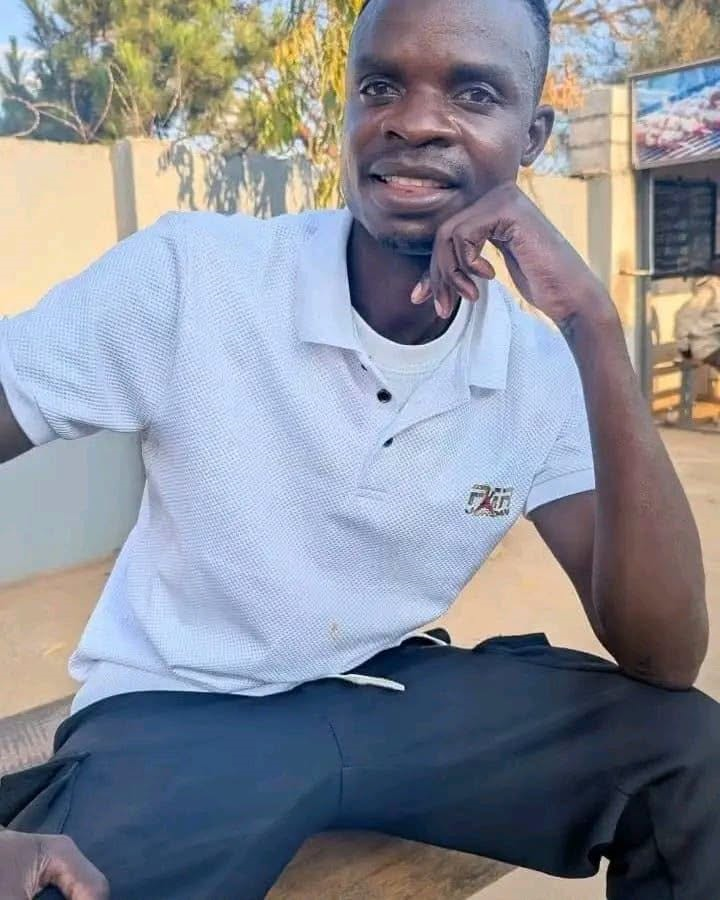
LUSAKA – Francis Kapwepwe, better known as “Why Me”, is back outside prison after serving a two-year sentence for hate speech, and his first public message suggests that the social-media personality is ready to reclaim his place online.
In a video circulating after his release, Kapwepwe declares: “The Lion is Back.”
It is a short message, but it carries significance for a young man whose rise to prominence was built almost entirely around social media and whose online activities eventually led him into repeated encounters with the law.
Kapwepwe was released on Friday after serving the sentence imposed by the Lusaka Magistrates’ Court in May 2026. He had pleaded guilty to two counts of hate speech arising from content published through his TikTok account, “Why Me the Lion of the World.”
But as Kapwepwe celebrates his return to freedom, former Lumezi MP Munir Zulu has offered him a very different message: be careful about what comes next.
“The world outside is quite cruel and nasty”
Zulu, who himself served a 12-month prison sentence after being convicted of criminal libel and seditious practices, addressed Kapwepwe in a Facebook post seen by Zambian Eye.
His advice was centred on one thing — the mobile phone that helped make Kapwepwe famous.
“My advice to the young man, Kapwepwe, is very simple, the world outside is quite cruel and nasty,” Zulu wrote.
He urged Kapwepwe to “avoid the temptation to use a mobile phone for anything that could put him in harm’s way with anyone.”
Zulu also warned that the attention Kapwepwe receives after his release may not last.
“No one will tell you what is good or bad and some people will celebrate you now only to forget about you when you get into trouble,” he wrote.
His message was not presented as a political argument, but as advice from someone who has himself experienced imprisonment.
“Focus on reconstructing yourself after your discharge from prison, because life must move on. Please, do not fall for anyone’s trap. I wish you well,” Zulu concluded.
From TikTok fame to a prison sentence
Kapwepwe became widely known through TikTok, where his videos attracted attention for their confrontational style and use of offensive and inflammatory language.
His account, “Why Me the Lion of the World”, became the platform through which much of his public persona was built.
The case that eventually resulted in his latest imprisonment involved videos published in March and April 2025.
During the trial, the court heard evidence from Zambia Information and Communications Technology Authority officials who had examined the videos and mobile phones linked to Kapwepwe’s TikTok account. The court was told that forensic analysis found the videos had not been generated using artificial intelligence.
Kapwepwe was convicted after changing his plea and admitting the offences.
Before sentencing, he apologised to President Hakainde Hichilema, Vice President Mutale Nalumango, Chief Mukuni, residents of Southern Province and other Zambians over his conduct.
The court subsequently imposed a two-year prison sentence with hard labour.
This was not his first prison experience
The latest sentence was not Kapwepwe’s first encounter with imprisonment.
His legal troubles had already attracted national attention during an earlier hate-speech case in Livingstone.
The Human Rights Commission said in January 2025 that Kapwepwe had initially been arrested in April 2024 and later appeared before the Livingstone Magistrates’ Court, where he was granted cash bail but remained in custody after difficulties meeting the bail conditions.
He was subsequently convicted in that matter and served a prison sentence.
His case became a wider point of discussion about social-media speech, hate speech, political expression and the responsibilities of content creators.
Why the “Lion is Back” message matters
Kapwepwe’s decision to announce his return using the phrase “The Lion is Back” is notable because the lion has been central to his online identity.
His TikTok account itself carried the name “Why Me the Lion of the World”.
The message therefore sounds less like an ordinary prison-release announcement and more like a declaration that the persona that made him famous has returned.
But the circumstances surrounding his release have changed.
He is returning to social media after spending two years in prison for conduct carried out through social media.
That creates an obvious tension.
The same platform that gave Kapwepwe a large following also became the setting for the conduct that resulted in his conviction.
And that is precisely why Munir Zulu’s warning about the mobile phone is significant.
A second chance or a return to the same cycle?
Kapwepwe’s release creates a new chapter rather than ending the story.
He has already said that his prison experience changed him.
According to reports following his release, Kapwepwe described his time behind bars as a period of “restructuring” and said he regretted allowing himself to be used by political actors. He also said he intended to conduct himself differently.
That makes his “Lion is Back” message particularly interesting.
Does it mean the return of the same social-media persona?
Or does it simply mean the return of Kapwepwe himself, now with the experience of prison behind him?
The answer will ultimately come from what he does next.
The lesson from Munir Zulu

Zulu’s intervention is unusual because he is speaking from recent personal experience.
He was released from prison in March 2026 after serving a 12-month sentence following convictions for criminal libel and seditious practices.
His advice to Kapwepwe therefore goes beyond the usual political reactions that have accompanied the TikToker’s rise.
He is warning him about what happens after the cameras, social-media posts and supporters disappear.
The central message is simple: prison can end, but the consequences of what someone does after prison can begin again immediately.
For Kapwepwe, that is particularly relevant because his most powerful tool — the mobile phone — is also the tool that has repeatedly placed him at the centre of controversy.
The wider question for social media users
Kapwepwe’s story has also become part of a much larger conversation in Zambia about the boundaries of online expression.
Social media has created opportunities for ordinary people to build large audiences without traditional media organisations or formal platforms.
But the law continues to apply to what is published online.
Kapwepwe’s case demonstrates how content posted to TikTok can become evidence in criminal proceedings, including through digital forensic examination.
The question for him now is not whether he can attract attention again.
He clearly can.
The more important question is what he will do with that attention.
As Munir Zulu puts it, life has to move on.
And for Kapwepwe, that life now begins outside prison.
Whether “The Lion is Back” becomes the beginning of a different chapter or a return to the behaviour that brought him into conflict with the law will depend on what comes next.
Zambian Eye will follow that next chapter.