
The Professional Teachers Union of Zambia (PROTUZ) has raised a red flag over some learning institutions who are charging teachers K100 to get cooking spaces for the school feeding program.
“The union would like to advise that such practices may not be well received by communities.
“The free education policy must remain truly free, without hidden costs,” the organization cautioned.
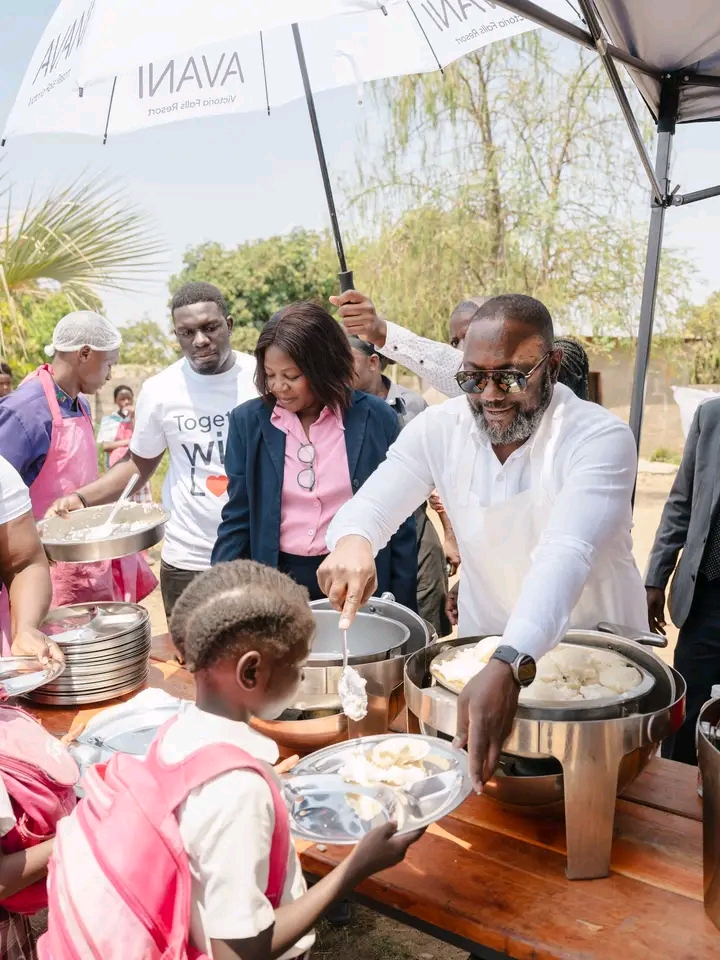
The Zambian government recently launched a school feeding program in the North-Western Province, specifically at Kasapa Primary in Mushindamo and Kamalamba Primary in Kasempa.
This initiative is aimed at reducing hunger and improving nutrition, supports free education by boosting school attendance and improving concentration among learners, directly supporting rural communities.
The program was officially rolled out in the North-Western Province, targeting rural, underserved schools. The launch was spearheaded by Minister of Health Dr. Alex Katakwe and Minister of Labour and Social Security Hon. Brenda Mwika Tambatamba.
Katakwe said the initiative is designed to ensure learners receive healthy, nutritious meals, thereby increasing school attendance and improving academic performance.
He added that the move reinforces the government’s dedication to ensuring no child learns on an empty stomach and supports the overall wellbeing of students.
This program is part of a broader government effort to strengthen education and social protection in Zambia.
PRESS STATEMENT (FOR IMMEDIATE RELEASE)
MILK TO BE ADDED TO ZAMBIA’S SCHOOL FEEDING PROGRAMME
Ministry of Education Permanent Secretary Educational Services – Dr. Kelvin Mambwe has announced that government will this year include a component of milk to enhance meal quality in the school feeding programme.
He said the government would engage the private sector to supply the milk to Early Childhood Centres.
“The Government of Zambia has this year included in the national budget allocation a component for milk to enhance meal quality. With this funding, the private sector will be engaged to supply milk to Early Childhood Education-ECE centres. This has made it possible to enrich school menus with nutritious foods, improving the health and concentration of learners,” he said.
Dr. Mambwe was speaking during the Public-Private Partnerships and innovative financing mechanisms to enhance investment in school meals side-event at the 11th Africa Day of School Feeding in Botswana held under the theme “Ensuring access to nutritious meals, clean water and hygiene.”
He stated that the school feeding programme in Zambia has significantly improved enrollment, attendance, and learning outcomes, which has encouraged the government to expand the programme toward universal coverage so that no learner is left behind.
Dr. Mambwe said strong Public and Private Partnerships are essential for sustainability.
“Such partnerships must avoid conflicts of interest, prevent undue influence, operate through clear agreements, joint planning, and shared accountability,” Dr Mambwe said.
The Permanent Secretary stressed that the link between agriculture and education is critical and that school feeding should support local farmers and food systems through coordinated, multi-sectoral committees that oversee menus, logistics and implementation.
He added that the government is strengthening data systems to track food production capacities and programme performance, emphasizing that reliable information enables better planning, monitoring, and documentation of progress by government and partners.
Dr. Mambwe presented that the Ministry of Education is working with key institutions, including the Office of the Vice President, to extend programs to vulnerable communities.
He noted that sustainable financing remains a major pillar adding that while governments must increase budgetary allocations as a targeted investment in national development, plans are underway to expand engagement with innovative funding partners, including private sector institutions.
The Permanent Secretary further added that the government, with support from partners, is in the process of developing a Sustainable Financing Strategy for the school feeding programme.
“Zambia is developing a clear roadmap for programme growth, monitoring, and evaluation. We are aligning our efforts with continental best practices guided by AUDA-NEPAD” Dr. Mambwe emphasised.
Issued by:
Julia Malunga (Ms.)
First Secretary-Press
Zambia High Commission,
Gaborone, Botswana